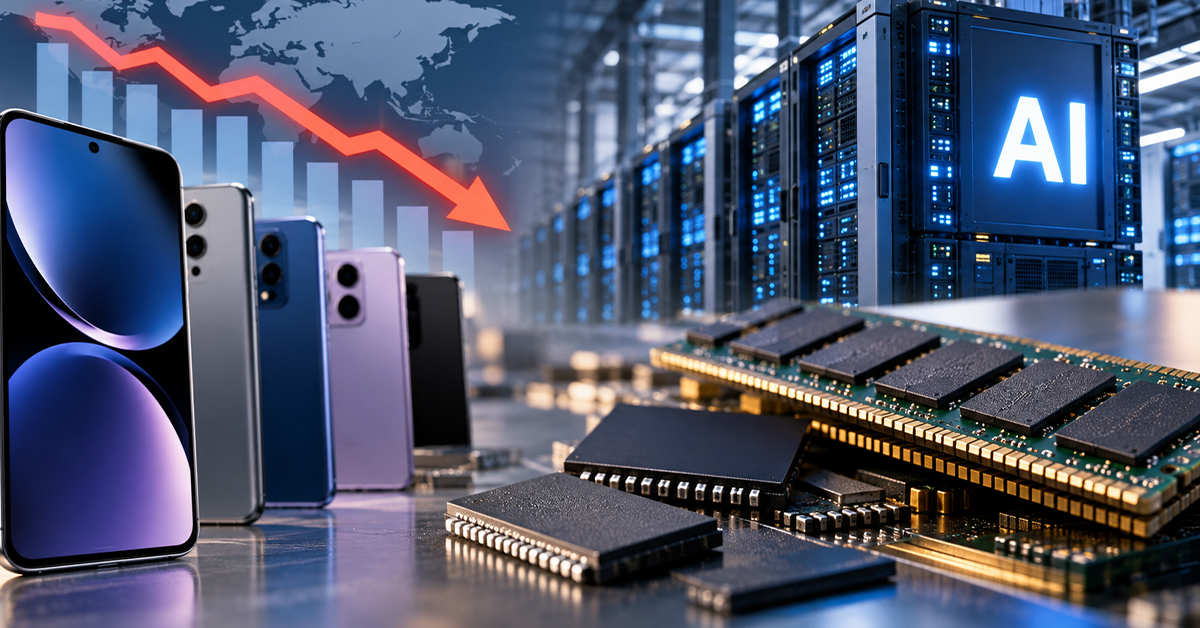

Global smartphone shipments fell 20% year-on-year in the third quarter of 2026, reaching their lowest third-quarter level since 2012, according to preliminary Counterpoint Research estimates reported by Channel NewsAsia on October 12. Rising memory chip costs and supply shortages are putting pressure on manufacturers, forcing them to reconsider prices, production volumes and product strategies.
Samsung retained its leading position, while Apple captured a 22% market share. Xiaomi, OPPO and vivo experienced steeper shipment declines, highlighting the challenges facing manufacturers competing in price-sensitive markets.
Why AI Demand Is Affecting Smartphone Supply
The rapid expansion of AI infrastructure is increasing demand for memory chips used in data centers. Advanced AI systems rely heavily on high-bandwidth memory (HBM), while smartphones use DRAM for temporary working memory and NAND flash for data storage.
As chipmakers prioritize products serving the expanding AI market, supplies of conventional memory components can become tighter. Reuters reporting published by The Business Times in October 2025 described how this shift in production capacity was contributing to shortages and higher prices for memory used in consumer electronics.
For smartphone manufacturers, more expensive or harder-to-source components increase production costs. Companies must decide whether to absorb those costs, raise retail prices, reduce production or focus on devices that offer better profit margins. Counterpoint’s Q3 estimates indicate that these pressures coincided with a sharp decline in shipments.
Samsung and Apple Lead a Shrinking Market
Samsung held the largest market share at 23%, despite a 3% year-on-year shipment decline. Counterpoint attributed its relative resilience partly to demand for the Galaxy Z Fold8 series and stable component supplies for mid-range models.
Apple followed with a 22% share, exceeding 20% for the first time in a third quarter. Its shipments nevertheless declined. Counterpoint attributed a smaller launch-month channel fill than a year earlier to the absence of a base iPhone 18 model alongside the launch lineup.
Market share measures a company’s portion of total shipments, not its absolute sales growth. A vendor can therefore gain relative share even while shipping fewer devices.
| Vendor | Q3 2026 market share | Year-on-year shipment change |
|---|---|---|
| Samsung | 23% | -3% |
| Apple | 22% | Declined; exact figure unavailable |
| Xiaomi | 10% | More than -30% |
| OPPO | Not reported | More than -20% decline |
| vivo | Not reported | More than -20% decline |
Source: Counterpoint Research preliminary estimates, reported by Channel NewsAsia, October 12, 2026.
Xiaomi and Other Chinese Brands Face Pressure
Xiaomi’s shipments fell more than 30%, reducing its market share to 10%. Counterpoint reported that the company cut its exposure to lower-priced phones and selected overseas markets to protect profit margins.
OPPO and vivo each recorded shipment declines exceeding 20%. These results illustrate the difficulties manufacturers face when component costs rise but customers remain sensitive to retail prices.
Reducing low-margin products may help protect profitability, but it can also limit shipment volumes and reduce a company’s presence in particular markets. The reported figures do not establish how much of each vendor’s decline resulted specifically from memory shortages.
What Readers Should Know
- The downturn is significant: Global shipments fell 20% year-on-year, reaching a third-quarter low not seen since 2012.
- Manufacturers are adjusting their strategies: Higher component costs are encouraging tighter product portfolios and a stronger focus on profitability.
- The recovery timeline remains uncertain: The figures are preliminary estimates, and the available reports do not establish when memory supplies or smartphone prices will stabilize.
Conclusion
The smartphone market’s Q3 decline shows how rising AI infrastructure demand can create cost and supply pressures elsewhere in the technology industry. Samsung and Apple retained strong relative positions, while Xiaomi, OPPO and vivo faced sharper shipment declines. Future performance will depend on component availability, manufacturers’ pricing decisions and consumers’ willingness to replace their devices.