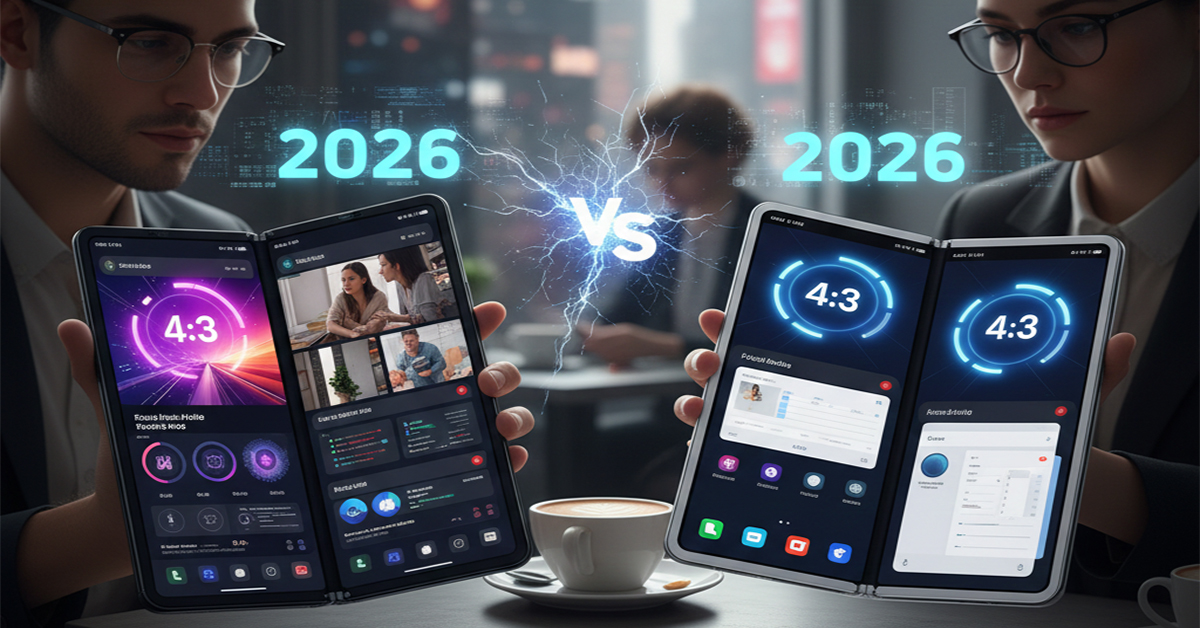

The foldable smartphone market is poised for its most significant transformation yet. Samsung Electronics, the undisputed pioneer in this nascent segment, is reportedly gearing up to launch a revolutionary new foldable device, internally dubbed “Wide Fold,” in autumn 2026. This strategic move aims to solidify its dominance and, more critically, position itself directly against Apple’s highly anticipated entry into the foldable arena. As industry buzz intensifies, all eyes are on 2026, the year that promises a dramatic 4:3 aspect ratio foldable showdown between these two tech titans.
Table of Contents
-
The Evolution of Foldables: Setting the Stage for 2026
-
Introducing Samsung’s ‘Wide Fold’: A Response to User Demands
-
Addressing the Aspect Ratio Dilemma
-
The Promise of a 4:3 Experience
-
-
Apple’s Grand Entrance: A Long-Awaited Contender
-
Why Apple’s Foldable Matters
-
Anticipated Design Philosophy
-
-
Head-to-Head: A Speculative Comparison (Samsung Wide Fold vs. Apple Foldable)
-
Display & Form Factor
-
Performance & Ecosystem
-
Pricing & Market Strategy
-
-
The Significance of the 4:3 Aspect Ratio
-
Enhanced Productivity and Multitasking
-
Superior Media Consumption
-
Improved External Screen Usability
-
-
Samsung’s Challenges and Opportunities
-
Battling Chinese Rivals and Addressing Crease Concerns
-
Innovating Beyond Hardware
-
-
Apple’s Path to Dominance: Leveraging Ecosystem Strength
-
The “Apple Effect” in New Categories
-
Integration with Existing Devices
-
-
Consumer Impact: Who Benefits from the Foldable War?
-
Conclusion: A Defining Moment for the Foldable Future
1. The Evolution of Foldables: Setting the Stage for 2026
When Samsung first unveiled the Galaxy Fold in 2019, it ushered in a new era of smartphone design. Despite initial hurdles and skepticism, the foldable market has steadily grown, primarily driven by Samsung’s relentless innovation with its Z Fold and Z Flip series. These devices offered a glimpse into a future where a phone could transform into a tablet, blurring the lines between form factors.
However, the journey has not been without its critics. Early foldable designs, particularly the “tall and narrow” aspect ratio of the cover screens on book-style foldables, presented usability challenges. Users often found typing cumbersome and content consumption less immersive on the outer display. The internal displays, while offering tablet-like real estate, sometimes suffered from a noticeable crease or durability concerns.
Now, as the technology matures and manufacturing processes refine, a new standard appears to be emerging: the 4:3 aspect ratio. This shift, championed by Samsung’s upcoming “Wide Fold” and likely mirrored by Apple, marks a pivotal moment, promising a more natural and user-friendly experience that could finally push foldables into the mainstream. The year 2026 is shaping up to be the battlefield where this new standard is truly defined.
2. Introducing Samsung’s ‘Wide Fold’: A Response to User Demands
Samsung’s “Wide Fold” is more than just another iteration; it’s a strategic evolution aimed at addressing some of the most persistent user feedback. The internal codename itself, “Wide Fold,” hints at its core design philosophy: a broader, more expansive display experience.
Addressing the Aspect Ratio Dilemma
Current book-style foldables, like the Galaxy Z Fold 5, typically feature a tall and narrow cover screen (e.g., 23.1:9) and a more square-ish main display (e.g., 5:6). While innovative, the narrow cover screen often feels cramped for daily tasks, pushing users to frequently unfold the device.
The Promise of a 4:3 Experience
The “Wide Fold” is expected to adopt a near-4:3 aspect ratio for its internal display when unfolded. This particular ratio is significant because it’s closer to the traditional display proportions found in small tablets or even older desktop monitors. This translates to:
-
Better app compatibility: Many existing Android apps are optimized for squarer displays, reducing awkward scaling or blank spaces.
-
Enhanced document viewing: Reading PDFs, e-books, and office documents will feel more natural, akin to a physical page.
-
Improved split-screen multitasking: Two apps running side-by-side on a 4:3 internal display will each have significantly more usable screen real estate.
This design choice suggests Samsung is listening intently to its user base, aiming to deliver a foldable that truly maximizes utility in both folded and unfolded states.
3. Apple’s Grand Entrance: A Long-Awaited Contender
Apple’s entry into any new product category is always met with immense anticipation and often redefines that category. For years, rumors have swirled about a foldable iPhone or iPad, but the company has famously held back, waiting for the technology to mature to its exacting standards.
Why Apple’s Foldable Matters
Apple’s cautious approach means that when they do launch a foldable, it’s expected to be a highly polished, seamlessly integrated device. Their reputation for intuitive software, premium build quality, and a robust ecosystem means their foldable will likely be a formidable competitor, even against Samsung’s years of experience. An Apple foldable could finally:
-
Legitimize the category: Mainstream consumers who have been hesitant about foldables might jump in once Apple gives its stamp of approval.
-
Drive further innovation: Apple’s entry will force all manufacturers, including Samsung, to push the boundaries of design, durability, and functionality even further.
Anticipated Design Philosophy
While specifics remain under wraps, many analysts predict Apple’s first foldable will also lean towards a tablet-like internal display, potentially adopting a 4:3 or similar aspect ratio. This would align with their existing iPad mini proportions and optimize for content consumption and productivity within the iOS ecosystem. Expect a focus on a nearly invisible crease, exceptional hinge durability, and possibly unique software optimizations that leverage the foldable form factor in ways only Apple can deliver.
4. Head-to-Head: A Speculative Comparison (Samsung Wide Fold vs. Apple Foldable)
As both giants converge on 2026 with similar design philosophies, a fascinating comparison emerges. While official specifications are years away, we can make informed predictions based on current trends and company strengths.
5. The Significance of the 4:3 Aspect Ratio
The industry’s likely pivot towards a 4:3 aspect ratio is not arbitrary; it’s a direct response to optimizing the foldable experience for maximum utility.
Enhanced Productivity and Multitasking
For users who leverage their foldables for work or extensive multitasking, a 4:3 ratio is a game-changer.
-
Better Document View: Spreadsheets, presentations, and word documents will display with fewer scrolling needs and a more natural layout.
-
Superior Split-Screen: Running two apps side-by-side will no longer feel cramped; each app will have ample space, making tasks like drafting emails while referencing a document truly efficient.
Superior Media Consumption
While widescreen videos might still have slight letterboxing, the overall immersive experience on a squarer display is often preferred for general browsing, social media, and reading. Text appears larger and more legible, and images fill more of the screen.
Improved External Screen Usability
By making the internal display wider, it’s highly probable that the external cover screen will also become wider. This means:
-
Easier Typing: Typing on the cover screen will feel less constrained, reducing errors and the need to constantly unfold the device.
-
More Natural App Interaction: Apps on the cover screen will behave more like those on a traditional smartphone, improving the overall user flow.
6. Samsung’s Challenges and Opportunities
Despite its head start, Samsung faces significant challenges in the evolving foldable landscape.
Battling Chinese Rivals and Addressing Crease Concerns
Chinese manufacturers like Huawei, Honor, Xiaomi, and Vivo have been aggressively pushing foldable innovations, often boasting thinner designs, less visible creases, and competitive pricing. Samsung must ensure its “Wide Fold” not only offers a superior aspect ratio but also sets new benchmarks for design elegance and crease elimination. Enhancing durability (especially dust resistance) will also be crucial.
Innovating Beyond Hardware
While hardware is a key differentiator, Samsung also needs to continue innovating on the software front, refining its One UI to fully leverage the new aspect ratio and multitasking capabilities. Features like S Pen integration, improved Flex Mode, and seamless app continuity between screens will be vital.
The opportunity for Samsung lies in leveraging its vast experience and established supply chain. They have refined hinge mechanisms, display technologies, and production processes over multiple generations. The “Wide Fold” allows them to reset expectations and solidify their position as the leading innovator, especially as Apple enters the fray.
7. Apple’s Path to Dominance: Leveraging Ecosystem Strength
Apple’s entry, though late, could be disruptive. They excel at refining existing technologies and integrating them seamlessly into their ecosystem.
The “Apple Effect” in New Categories
When Apple enters a new market (e.g., smartwatches, tablets, wireless earbuds), they often redefine user expectations and drive massive adoption. Their foldable will likely showcase unparalleled software-hardware integration, making the foldable experience feel intuitive and effortless.
Integration with Existing Devices
An Apple foldable will seamlessly integrate with AirPods, Apple Watch, Macs, and iPads, offering a unified user experience that is difficult for competitors to match. Features like Handoff, Universal Clipboard, and Continuity Camera would be even more compelling on a device that transforms between phone and tablet. Apple’s focus on privacy and security will also be a major selling point.
8. Consumer Impact: Who Benefits from the Foldable War?
Ultimately, the biggest winners of this impending foldable showdown will be the consumers. The intense competition between Samsung and Apple will drive:
-
Accelerated Innovation: Both companies will push the boundaries of display technology, hinge design, battery life, and software optimization.
-
Improved Durability: Expect significant advancements in screen resilience, crease reduction, and water/dust resistance.
-
Competitive Pricing: While high-end foldables will remain premium, the increased competition might eventually lead to more accessible price points over time.
-
Diverse Choices: Users will have a wider range of refined foldable designs and experiences to choose from, catering to different needs and preferences.
9. Conclusion: A Defining Moment for the Foldable Future
The year 2026 promises to be a landmark year for foldable smartphones. Samsung’s “Wide Fold” represents a strategic evolution, aiming to perfect the user experience with a more versatile 4:3 aspect ratio. Simultaneously, Apple’s long-awaited entry is set to shake up the market, bringing its signature blend of design, performance, and ecosystem integration.
This showdown isn’t just about who sells more devices; it’s about defining the future of mobile computing. The convergence on a 4:3 tablet-like form factor suggests a consensus on what truly makes a foldable useful and desirable. As these two titans prepare to clash, consumers can look forward to a new generation of foldables that are more powerful, more intuitive, and more integrated than ever before, truly living up to their transformative potential.