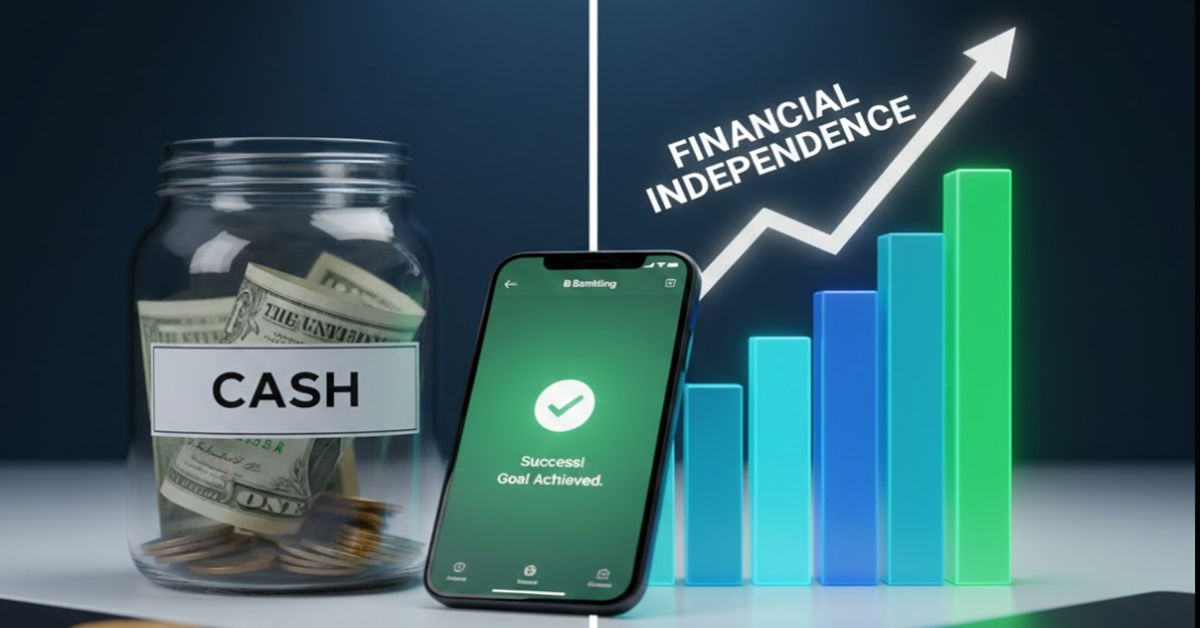

Emergency fund strategy discussions usually begin and end with one piece of advice: save six months of expenses and let it sit in a savings account. For most people, this means keeping $25,000 to $50,000 in a big bank account earning a measly 0.01% interest. But if you have found the Financial Independence fundamentals, you know that the answer to “do you actually need one?” is far more nuanced than the experts suggest.
While you absolutely cannot be living paycheck to paycheck and have a successful financial life, the “inert” emergency fund might be the biggest drag on your long-term wealth.
The Problem with Traditional Emergency Fund Dogma
Most personal finance experts treat the emergency fund as an all-or-nothing goal. They suggest your first financial priority is to put your head down and save that massive lump sum. While there is peace of mind in having assets, there is a massive downside to keeping that much cash on the sidelines.
The True Cost of “Safe” Cash
When you keep $25,000 in a standard savings account for 40 years, it remains $25,000 (and actually loses value to inflation). However, if you apply an optimized emergency fund strategy and invest that money, the results are life-changing.
-
The Rule of 72: At an 8% annual growth rate, your money doubles every nine years.
-
The 36-Year Projection: That same $25,000 could grow to $400,000 if invested in low-cost index funds.
-
Opportunity Cost: By keeping the money inert, you are essentially paying hundreds of thousands of dollars for the feeling of “security.”
Why Your Monthly Savings Rate Matters More
The real goal isn’t just a static bank balance; it’s your monthly savings rate. Building a gap between your income and your expenses is the first and foremost goal of personal finance.
If you have no assets, saving your first $1,000 to $5,000 is a total game-changer. It lowers your stress levels because “lumpy” life events—like a $150 flat tire—stop being “hair-on-fire” emergencies and simply become minor frustrations.
Redefining the Emergency in “Emergency Fund Strategy”
Once you surpass a net worth of $50,000 or $100,000, you need to ask yourself: What is truly an emergency that requires cash in under 24 hours?
In the modern age, the answer is almost “nothing.”
-
Credit Card Grace Periods: Almost every major expense can be put on a credit card.
-
Asset Liquidity: You have approximately 30 days to pay that statement. In that time, you can sell shares in an S&P 500 fund and transfer the cash to your bank.
-
Digital Speed: Money transfers now happen within three business days, making the need for large piles of idle cash obsolete.
Investing vs. Hoarding: Finding the Balance
Instead of 6 months of cash, consider a tiered emergency fund strategy:
-
Tier 1: $2,000–$5,000 in a checking account for immediate “lumpy” expenses.
-
Tier 2: A robust portfolio of low-cost index funds that acts as your true safety net.
-
Tier 3: Access to a credit line or credit card for short-term liquidity.
This approach maximizes your net worth over a 30-to-50-year period while still providing the psychological safety net required to sleep at night.
Conclusion: Personal Finance is Personal
Ultimately, your emergency fund strategy should be designed to lower your stress and run on autopilot. For some, keeping $5,000 in a checking account is the perfect “sleep at night” factor. For others, knowing every dollar is working in the market is what brings peace.
Don’t just listen to the dogma of the 6-month rule. Think through your liquidity, analyze your assets, and choose a path that leads to true wealth.
Would you like me to analyze your current savings to see how much opportunity cost you might be losing to an inert bank account? Leave a comment below!