
Table of Contents
-
Introduction: The Significance of the Chinese Market and Apple’s New Strategy
-
I. The New Delivery Offensive: Free 3-Hour Shipping
-
Service Details and Scope
-
Partnership with Meituan
-
-
II. The Fierce Competitive Landscape and Domestic Rivals
-
The Resurgence of Huawei
-
Technological Prowess and Home-Grown Chips
-
-
III. Financial Challenges: Revenue Decline in Greater China
-
Third-Quarter Financial Performance
-
Apple’s Attribution for the Sales Dip
-
-
IV. The Strategic Significance of Speed and Convenience
-
Meeting Chinese Consumer Expectations
-
Table: Apple’s Delivery Service Changes in Mainland China
-
-
Conclusion: The Future of the House-to-House Battle
Introduction: The Significance of the Chinese Market and Apple’s New Strategy
In the world’s largest smartphone market, China, Apple is embarking on a new phase in its effort to defend its turf. The US tech giant has initiated a fresh strategic move: offering free, three-hour home delivery for new iPhones in select mainland Chinese cities.
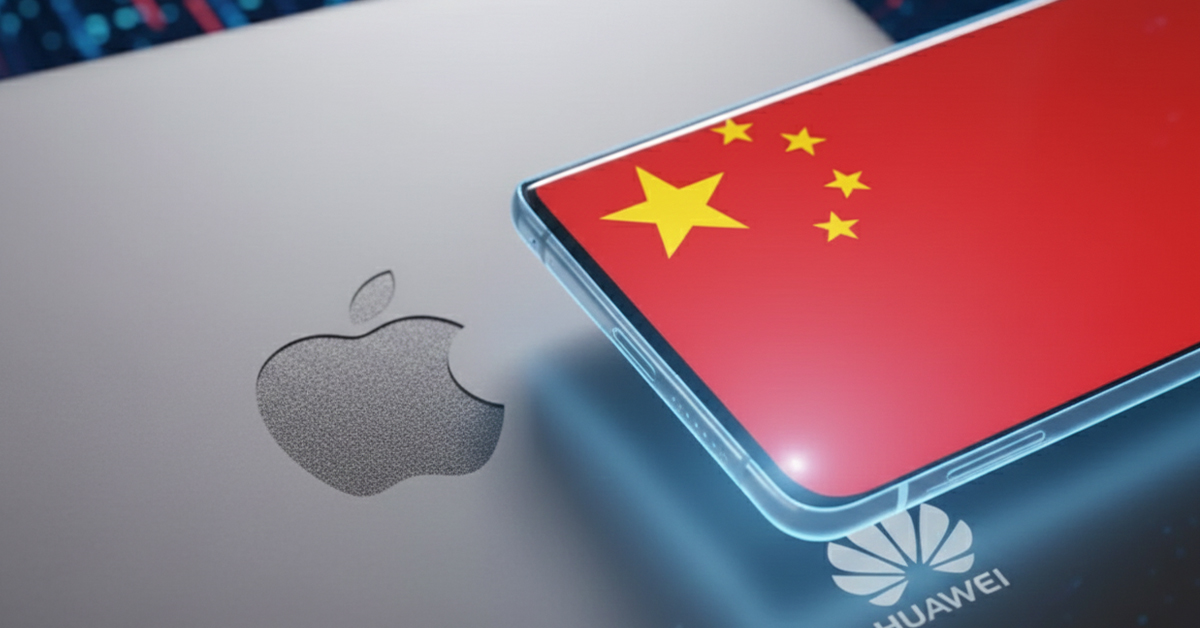
This commitment to extremely rapid, complimentary delivery is not merely a sales promotion; it represents a direct and aggressive response to the mounting competition from formidable domestic rivals, particularly Huawei Technologies. Huawei has been steadily rolling out new product lines, notably the flagship Mate 80 series with upgraded home-grown processors, in a determined push to reclaim market share. With Apple grappling with weaker sales figures in the crucial Greater China region, this “house-to-house battle” via logistics has become a critical maneuver for maintaining its position in the market.
I. The New Delivery Offensive: Free 3-Hour Shipping
Apple’s latest initiative, effective from Wednesday, positions convenience as a primary competitive tool. By making its express delivery free, the company is directly addressing the Chinese consumer’s high expectations for speed and accessibility in e-commerce.
Service Details and Scope
The complimentary three-hour delivery service applies to in-stock items across a wide range of Apple’s most popular products:
-
iPhone
-
iPad
-
Apple Watch
-
MacBook Pro
-
MacBook Air
-
AirPods
For other products not included in this free express tier, the standard express delivery fee of 45 yuan (US$6.40) will still apply. This shift is significant, as Apple previously charged 45 yuan for its express service, which has been available in certain mainland regions since 2022. The transition to a free service for key flagship products underscores the urgency of Apple’s current marketing drive in China.
Partnership with Meituan
Further amplifying its logistics capabilities, Apple’s mainland resellers have forged a partnership with Meituan, China’s dominant food-delivery giant. This collaboration allows for orders placed through the Meituan platform to be delivered in under an hour. This hyperlocal, ultra-fast delivery mechanism leverages Meituan’s extensive and highly efficient network, enabling Apple and its partners to compete directly with the immediacy offered by local retailers and online platforms. The one-hour delivery through third-party platforms complements the three-hour direct delivery service, creating a layered approach to logistics supremacy.
II. The Fierce Competitive Landscape and Domestic Rivals
Apple’s aggressive pivot toward logistics and delivery speed is a direct consequence of the escalating competitive pressure from its domestic counterparts.
The Resurgence of Huawei
The most potent challenge comes from Huawei. Despite years of crippling US sanctions, Huawei has demonstrated a powerful resurgence within the mainland Chinese market. The company has aggressively rolled out new products, appealing to both nationalist sentiment and consumers eager for high-quality domestic technology. The launch of the Mate 80 series in late November marked a critical moment, as the new flagship features upgraded home-grown processors.
Technological Prowess and Home-Grown Chips
Huawei’s ability to develop and integrate advanced, domestic chip technology has not only restored consumer confidence but has also presented a genuine performance rival to Apple’s iPhones. This technological breakthrough allows Huawei to aggressively push its high-end smartphones, directly challenging Apple’s premium market dominance. The increasing performance parity and the psychological advantage of supporting a domestic brand place significant headwinds on Apple’s sales outlook.
III. Financial Challenges: Revenue Decline in Greater China
The Cupertino-based company has not been immune to the competitive pressures and economic shifts in the region, evidenced by recent financial results.
Third-Quarter Financial Performance
In the third quarter of the fiscal year, Apple’s revenue generated from the Greater China region—which encompasses mainland China, Hong Kong, and Taiwan—experienced a year-on-year decline of 4 per cent. This dip underscores the severity of the challenge Apple faces in maintaining its revenue streams in this highly contested market.
Apple’s Attribution for the Sales Dip
Apple attributed the quarterly decline primarily to “supply constraints.” While supply issues can certainly impact sales availability, market analysts suggest that the escalating competition from Huawei and other domestic brands, combined with broader economic softness in China, played a more substantial role in the weakening sales performance. The company’s immediate response—enhanced delivery—suggests an operational focus on removing friction points for consumers, which is often a necessary tactic when product demand is softening.
IV. The Strategic Significance of Speed and Convenience
The decision to offer free, ultra-fast delivery is a calculated strategic move designed to exploit the distinct characteristics of the Chinese consumer market and logistics infrastructure.
Meeting Chinese Consumer Expectations
Chinese consumers have become accustomed to instant gratification in their online shopping experience, largely driven by tech giants like Alibaba and JD.com. In this environment, a standard delivery window of several days is seen as a major inconvenience. By offering three-hour free delivery, Apple eliminates the logistical advantage of local competitors and makes the purchasing decision as seamless and immediate as possible, thereby removing one major point of friction that might drive a customer toward a faster local option. This move is a recognition that, in China, logistics speed is as important as product quality.
Table: Apple’s Delivery Service Changes in Mainland China
| Service Type | Scope of Products | Previous Cost (Express) | Current Cost (3-Hour) | Delivery Time | Strategic Implication |
| Direct Express | iPhone, iPad, Watch, Macs, AirPods | 45 yuan (US$6.40) | Free | 3 Hours | Enhances customer convenience and loyalty; Direct response to slowing sales. |
| Retailer Express | Various in-stock items | Varies | Varies (often low/free) | Under 1 Hour | Leverages Meituan’s localized network for immediate, hyper-local fulfillment. |
| Standard Express | Other products | 45 yuan (US$6.40) | 45 yuan (US$6.40) | Standard express window | Cost maintained for lower-priority items. |
Conclusion: The Future of the House-to-House Battle
Apple’s new commitment to free, three-hour iPhone delivery marks a pivotal moment in its ongoing struggle for dominance in the Greater China market. No longer relying solely on brand premium and product quality, the company is now directly competing on logistics and consumer convenience. This house-to-house battle, fought on the speed of delivery and the seamlessness of the purchasing experience, will be crucial in determining if Apple can successfully fend off the resurgent Huawei and reverse the recent trend of declining sales in the face of fiercer competition. The effectiveness of this strategy will be closely watched by the industry as a bellwether for foreign brands operating in China’s dynamic, consumer-centric economy.