
By genznature.com January 15, 2026
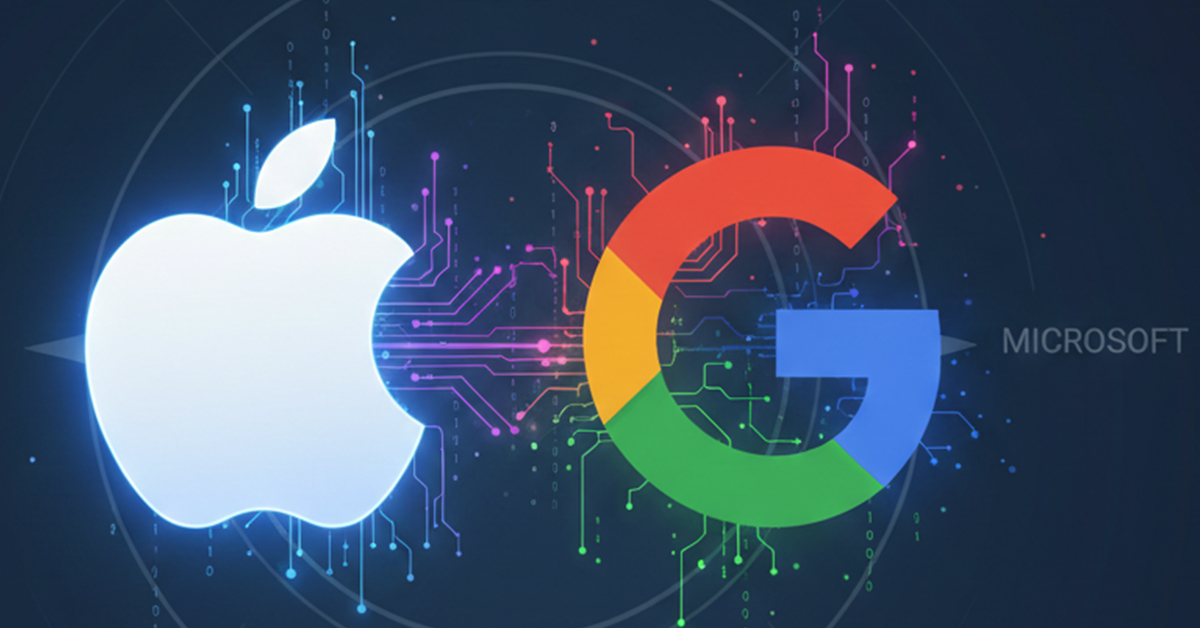
In a move that has sent shockwaves through Silicon Valley, the long-standing “cold war” between Apple and Google has officially thawed—not in the world of operating systems, but in the high-stakes arena of Artificial Intelligence. This week, Apple and Google confirmed a multi-year partnership that will see Google Gemini become the primary engine behind the next generation of Apple Intelligence and a completely revamped Siri.
This collaboration marks the most significant strategic realignment in the tech industry since the launch of the original iPhone. Here is everything you need to know about why Apple chose Gemini and what it means for the future of your devices.
1. The Deal: Gemini as the “Brain” of Siri
While Apple has spent years developing its own in-house AI models (internally known as “Ajax”), the company has reportedly faced challenges in scaling these models to handle complex, multi-step reasoning. By late 2025, internal evaluations showed Siri failing complex queries at a rate that threatened its relevance.
To close the gap, Apple has turned to Google. Under this new deal, a custom-built, 1.2 trillion parameter version of Gemini 3 will underpin Apple’s Foundation Models. This will power:
-
A Personalized Siri: Expected to launch with iOS 26.4 in Spring 2026, the new Siri will understand personal context, on-screen content, and complex cross-app requests.
-
System-Wide Summarization: Deeper integration for summarizing emails, chat records, and long-form documents.
-
World Knowledge: While Apple handles local tasks on-device, “World Knowledge” queries will be routed to Gemini’s powerful reasoning engine.
2. Why Google? Performance and Hardware
Apple reportedly evaluated OpenAI’s GPT-5 series and Anthropic’s Claude before settling on Google. The deciding factors were:
-
Benchmark Superiority: Gemini 3 Pro showed nearly double the performance of its rivals in abstract visual reasoning and mathematical problem-solving benchmarks.
-
Vertical Integration: Google’s use of its own TPU (Tensor Processing Units) hardware allows for massive scale and cost-efficiency that third-party model providers struggle to match.
3. Privacy: The “Stateless AI” Solution
The biggest question for iPhone users is: Does Google get my data? Apple insists the answer is no. The partnership is built on a unique architectural compromise:
-
Private Cloud Compute (PCC): Gemini models will run inside Apple’s own secure, “stateless” server environment. Data is processed for the specific task and then immediately wiped, with no persistent storage and no access given to Google’s administrative teams.
-
White-Labeling: Unlike the optional ChatGPT integration, Gemini will work “behind the scenes.” Users won’t see Google branding; they will simply experience a much smarter “Apple Intelligence.”
4. Market Impact: Alphabet Hits $4 Trillion
The financial world has reacted with unprecedented optimism. Following the announcement, Google’s parent company, Alphabet, briefly touched a $4 trillion market valuation, joining the ranks of Nvidia and Microsoft. Analysts at Wedbush Securities described this as a “validation moment” for Google’s AI strategy, positioning Gemini as the industry standard for both Android and iOS ecosystems.
For OpenAI, this deal represents a significant shift. While ChatGPT remains an “opt-in” choice for specific creative tasks on the iPhone, it is no longer the default foundation for Apple’s core services.
The Verdict: A Pragmatic Masterstroke?
For years, Apple’s “vertical integration” meant doing everything in-house. However, the sheer speed of AI development has forced a change in philosophy. By outsourcing the “heavy lifting” of AI reasoning to Google while maintaining control over the user experience and privacy, Apple has effectively bought itself time to catch up without sacrificing its brand promise.
As 2026 unfolds, the “Mobile AI Battle” appears to be transitioning from a fight over who has the best hardware to a fight over who can provide the most useful, integrated, and private assistant.