
Table of Contents
-
Introduction
-
What is Futures Trading? Moving Beyond Spot
-
The Mechanics of Leverage: Power and Peril
-
Advanced Risk Management: Protecting Your Capital
-
Reading Momentum: Key Technical Indicators
-
Strategic Execution Matrix
-
Key Takeaways
-
Frequently Asked Questions (FAQs)
-
Conclusion & Outro
Introduction
Transitioning from spot markets to Futures Trading represents a major shift in a digital publisher’s or investor’s financial journey. While spot trading focuses on straightforward capital accumulation, the derivatives market introduces complex mechanics designed to maximize capital efficiency.
For intermediate traders, futures are not a tool for speculative gambling, but an advanced instrument used to amplify market exposure, hedge spot portfolios against downward trends, and capture profits regardless of market direction. This guide breaks down the precise strategies and strict protocols required to master futures without risking catastrophic liquidation.
What is Futures Trading? Moving Beyond Spot
Unlike spot trading, where you purchase and take immediate ownership of the underlying digital asset, Futures Trading involves buying or selling derivative contracts. These contracts represent the value of a specific cryptocurrency, allowing you to speculate on its future price movement without ever holding the asset in your wallet.
This operational structure opens up two critical market capabilities:
-
Long Positions: Profiting from upward market momentum by buying a contract with the intention to sell higher.
-
Short Positions: Profiting from downward market momentum by selling a contract with the intention to buy back cheaper.
The Mechanics of Leverage: Power and Peril
The primary appeal of futures trading is leverage—using borrowed capital from the exchange to open positions significantly larger than your actual account balance.
While platforms offer settings ranging from 10x up to 150x, understanding how leverage drastically alters your liquidation price threshold is the single most important factor for account survival.
The Mathematical Reality of Leverage:
The relationship between leverage and the price movement required to trigger total capital liquidation is strictly linear:
$$\text{Liquidation Price Movement \%} = \frac{100}{\text{Leverage}}$$
-
At 2x Leverage, an asset must move 50% against your position to trigger liquidation.
-
At 10x Leverage, an asset only needs to move 10% against you to wipe out your margin.
-
At 100x Leverage, a tiny 1% price fluctuation results in instant account destruction.
Advanced Risk Management: Protecting Your Capital
To maintain profitability over a multi-year horizon, intermediate traders treat risk management as a non-negotiable rule. Capital preservation always takes priority over chasing profits.
Reading Momentum: Key Technical Indicators
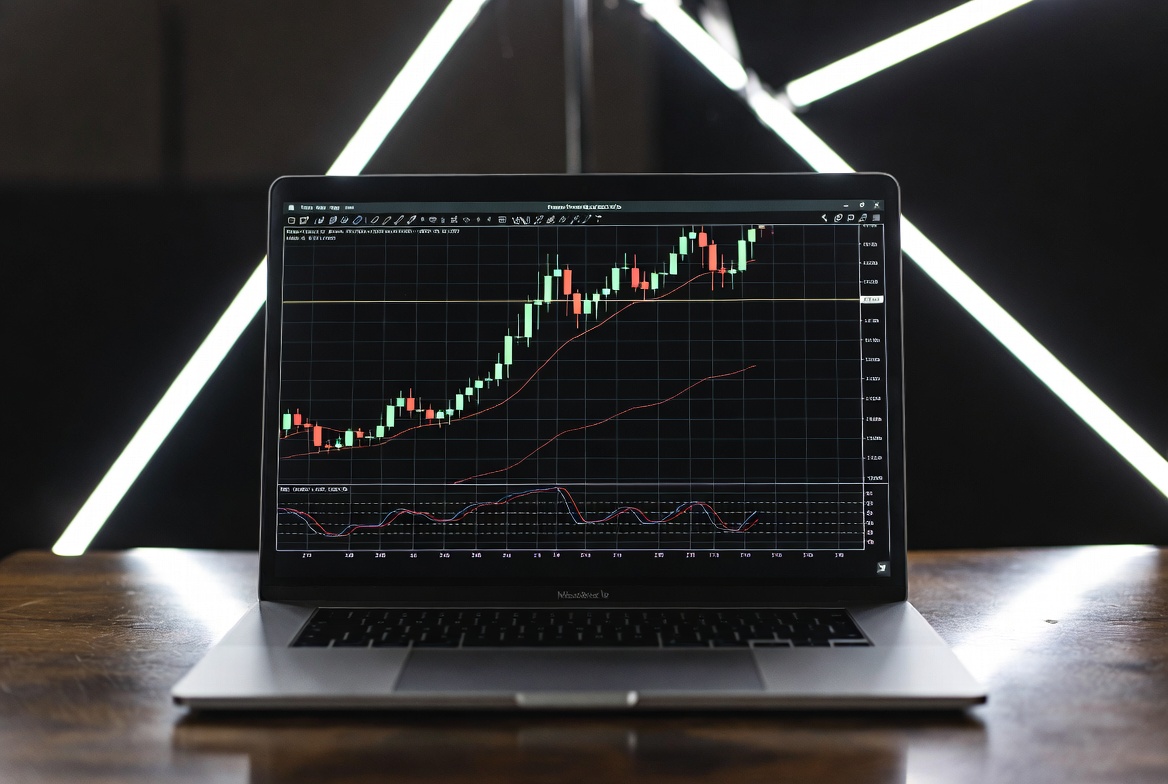
Successful futures execution relies heavily on probability-based technical analysis rather than intuition. Intermediate traders look for alignment across three foundational metrics:
1. Exponential Moving Average (EMA)
The EMA tracks price trends over specific periods (like the 20-day, 50-day, or 200-day) while putting more weight on recent price action. For futures traders, watching a short-term EMA cross over a long-term EMA helps identify macro trend shifts early, mapping out optimal long or short entry zones.
2. Relative Strength Index (RSI)
The RSI is a momentum oscillator measured on a scale from 0 to 100. It highlights when an asset’s speed of price movement has become unsustainable.
-
RSI greater than 70: Indicates an overbought condition, alerting short-sellers to potential exhaust zones.
-
RSI less than 30: Indicates an oversold condition, showing long traders high-probability bounce areas.
3. Moving Average Convergence Divergence (MACD)
The MACD reveals the relationship between two distinct moving averages of an asset’s price. By closely tracking crossovers between the MACD line and the signal line, traders can spot shifts in momentum before they fully reflect on the primary price chart.
Strategic Execution Matrix
The matrix below compares the structural profiles of different trading styles to help you balance your market exposure:
| Strategy / Vehicle | Core Premise | Unique Risk/Reward Element | Target Horizon |
| Spot Trading | Direct asset purchase and token ownership. | Zero liquidation risk. Limited to asset value volatility. | Multi-year macro accumulation. |
| Conservative Futures | Low-leverage derivative contracts (2x – 5x). | Amplifies returns while keeping liquidation thresholds safely distant. | Days to weeks (Swing Trading). |
| Aggressive Futures | High-leverage contracts (10x – 150x). | Extremely high risk. Tiny market moves cause total capital loss. | Minutes to hours (Scalping). |
Key Takeaways
-
No Asset Ownership: Futures trading deals in price contracts, not the physical underlying tokens.
-
The Leverage Double-Edge: Leverage amplifies capital efficiency, but ignoring the linear relationship with liquidation leads to rapid account failure.
-
Automation is Mandatory: Never enter a derivative trade without an active, automated stop-loss order already sitting on the exchange order book.
-
Trend Alignment: Use a combination of EMA, RSI, and MACD indicators to confirm momentum before deploying capital into a leverage position.
Frequently Asked Questions (FAQs)
Q1: Why should I trade futures instead of just buying spot?
Futures allow you to hedge your existing spot portfolio by opening short positions during market downturns, and they let you trade with higher capital efficiency using low leverage.
Q2: What is the difference between Isolated and Cross Margin?
Isolated Margin assigns a specific, limited amount of capital to a single trade, meaning your risk is capped at that specific amount. Cross Margin uses your entire futures account balance to prevent liquidation, which risks wiping out your entire account if a trade goes badly.
Q3: How do funding fees work in futures trading?
Funding fees are periodic payments made between long and short traders every few hours to keep the futures contract price aligned with the spot index price. Depending on market sentiment, you will either pay or receive these small fees.
Conclusion & Outro
Mastering futures trading requires high psychological discipline and strict execution. By treating leverage as a tool for capital efficiency rather than rapid enrichment, keeping your leverage factors low, and respecting automated stop-loss boundaries, you can successfully navigate changing market trends. Treat your trading journey as a marathon based on strict probabilities