
Samsung Galaxy Z TriFold: A Hands-On Review and Technical Deep Dive
Here is a comprehensive article about the Samsung Galaxy Z TriFold, based on the provided CNET articles, structured with tables and formatted for clarity.
Table of Contents
-
Introduction: Initial Skepticism Overcome
-
Design Innovations and Ergonomics
-
Folding Mechanism and Durability
-
Display and Crease Management
-
Samsung (U-Shape) vs. Huawei (Z-Shape) Trifold Designs
-
Technical Specifications and Key Features
-
Target Market and Multitasking Capabilities
-
Conclusion: A Promising, Albeit Imperfect, Device
1. Introduction: Initial Skepticism Overcome
The Samsung Galaxy Z TriFold, launched in 2025, initially faced skepticism due to concerns that it prioritized durability over the versatility seen in competitors like the Huawei Mate XT. Positioned as a wide-screen tablet that folds into a pocket-friendly phone, a brief 20-minute interaction with the device at a Samsung store in Dubai was enough to quell this doubt for at least one reviewer. The device is a hybrid between a phone and, when unfolded, a massive 10-inch tablet.
2. Design Innovations and Ergonomics
Samsung made several intelligent design choices that enhance the Z TriFold’s user experience:
-
Dual Hinges of Different Sizes: The device features two separate hinges to accommodate its two folding points. The left hinge is wider than the right hinge (which is similar to the Galaxy Z Fold 7’s hinge) to handle the stacked thickness of the panels when folded.
-
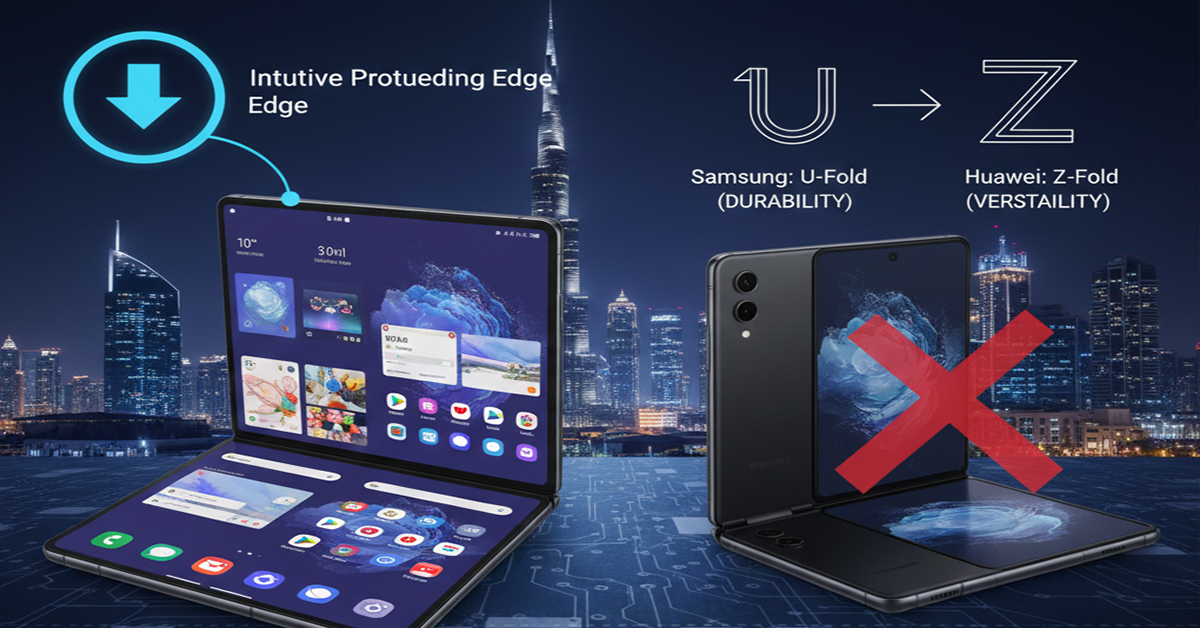
Intuitive Unfolding Edge: The right-most panel is slightly wider, causing it to protrude when the device is fully folded. This protruding edge provides an easy “lip” for the user’s finger to catch and push open, making unfolding significantly more intuitive compared to the flat-sided Galaxy Z Fold 7 or the Honor Magic V5.
-
Responsive Hinges: The wider right hinge includes a spring-like feel and “pops open” as soon as the user begins to unfold it, adding to the device’s ergonomic advantage.
3. Folding Mechanism and Durability
The Z TriFold’s folding mechanism is inward-folding, resulting in a “U” shape when viewed from the side.
4. Display and Crease Management
Despite having three panels and two hinges, Samsung has done a commendable job in minimizing the visibility and depth of the two screen creases. The creases are virtually non-existent unless viewed from an extreme angle, and they are difficult to feel when running a finger across the 10-inch main screen. This success is attributed to the application of learnings from the Galaxy Z Fold 7’s hinge overhaul.
5. Samsung (U-Shape) vs. Huawei (Z-Shape) Trifold Designs
The Samsung Galaxy Z TriFold (U-shape) and the Huawei Mate XT (Z-shape) represent distinct philosophical approaches to trifold design.
6. Technical Specifications and Key Features
The Z TriFold is built with premium components, borrowing elements from Samsung’s other 2025 flagship devices:
-
Processor: Custom Snapdragon 8 Elite processor.
-
Thickness (Unfolded): Just 3.9mm at its thinnest point (excluding the camera). The center panel is 4.2mm thick.
-
Battery: 5,600-mAh three-cell battery with 45W super-fast charging support.
-
Main Camera: Rear triple-camera system featuring a 200-megapixel wide-angle camera (similar to the S25 Ultra), a 12-megapixel ultrawide, and a 10-megapixel telephoto camera.
-
Displays: 10-inch main screen and a 6.5-inch cover display. Both AMOLED screens support a refresh rate of up to 120Hz.
-
Software: Arrives with Android 16 and One UI 8.
7. Target Market and Multitasking Capabilities
Samsung positions the Z TriFold as an ideal device for multitasking. Its massive screen canvas, combined with the optimized One UI 8 software, offers an “ultimate form of multitasking”.
-
App Management: The device allows users to run three apps side-by-side and add multiple pop-up windows.
-
Workspace Creation: Users can create separate workspaces (similar to Desktops on MacOS and Windows) with just two taps.
-
Media Consumption: The wide screen is also ideal for watching movies and TV shows, allowing seamless content viewing with minimized creasing.
One notable omission is the lack of a built-in kickstand or support for Qi2.2 magnetic accessories (like Apple’s MagSafe). This limits its productivity potential as a standalone wide-screen tablet, forcing users to rely on bulky, third-party kickstand cases.
8. Conclusion: A Promising, Albeit Imperfect, Device
The Samsung Galaxy Z TriFold is a promising device that showcases Samsung’s commitment to advancing foldable technology. While its design decision to forego the “mini-tablet” mode limits its versatility compared to the Huawei Mate XT, this trade-off is a deliberate move to enhance long-term durability. The smart ergonomic choices, like the protruding edge and the successful minimization of the screen crease, make the device a surprising success in terms of handling and user experience.
The Galaxy Z TriFold is slated for release in Korea on December 12, 2025, with a price tag of around $2,440 (3.59 million won). It will arrive in the US in the first quarter of 2026. Despite its thickness and the lack of a built-in stand, the Z TriFold is a powerful hybrid that hints at an exciting future for triple-display foldables.